Beyond Syntax: The Best Free Platforms to Master Agentic Coding in 2026
In an era where AI writes the lines, your value lies in orchestrating the system.

Imagine it is a Monday morning in March 2026. You open your IDE—not to laboriously type out a boilerplate useEffect hook or a standard Express middleware, but to brief your Agentic Squad on a new feature. You describe the "vibe" of the user flow, and your AI agents begin drafting the architecture, testing the edge cases, and refactoring for performance. Within minutes, a pull request is ready for your review.
But here is the 2026 paradox: while AI can write the code, it cannot truly understand the system. As the "Vibe Coding" trend takes over Reddit and Hacker News this month, the barrier to entry for software development has shifted. You no longer need to spend months memorizing specific syntax; you need to master Agentic Orchestration.
If you are starting your journey today, the "best" free resources aren't the ones that simply teach you how to code—they are the ones that teach you how to think like an architect in an AI-first world. In this guide, we will explore the landscape of free coding education as it stands in early 2026, focusing on the platforms that have successfully integrated AI without sacrificing the foundational "grit" required to be a professional engineer.
Section 1: The 2026 Shift — From "Syntax Memorizer" to "System Architect"
The conversation in the developer community has changed radically over the last twelve months. On Hacker News in February 2026, a major discussion thread titled "Does Clean Code Still Matter?" reached over 2,000 comments. The consensus was startling: Architectural clarity is now significantly more important than "human-readable" syntax. Why? Because modern AI agents like Claude Code and Cursor can refactor messy syntax in milliseconds, but they still struggle to understand complex, systemic design choices.
This has led to a rise in "Junior Dev Anxiety." New learners are terrified that by the time they learn Python or TypeScript, the AI will be doing it all. However, senior developers and hiring managers at firms like CRED and Stripe are signaling the opposite. They aren't looking for "coders"; they are looking for Agentic Architects—people who understand the underlying logic well enough to catch when an AI agent hallucinates a security flaw or suggests a sub-optimal database schema.
The biggest risk for a learner in 2026 is falling into "Tutorial Hell 2.0." In the old days, this meant blindly following a video. Today, it means blindly following an AI prompt. To avoid this, you must choose platforms that use AI as a Socratic tutor rather than a ghostwriter.
To understand the 2026 developer's role, consider this analogy: You are a Film Director. The AI agents are your crew—the camera operators, the lighting techs, and the actors. They are incredibly talented, but without your vision, your script, and your "final cut" authority, they will produce a chaotic mess. You don't need to know how to fix a broken 8K camera lens, but you absolutely must know what a good shot looks like and how the scene fits into the overall movie.
Section 2: The Socratic Foundation — Harvard CS50 (2026 Edition)
Harvard’s CS50x remains the undisputed heavyweight champion of computer science education. The 2026 version, released on January 1st, was recorded in late 2025 and reflects the most modern pedagogical approach to AI.
The standout feature of the 2026 curriculum is the CS50 Duck. While previous versions experimented with AI, the Duck is now a core, mandatory part of the learning environment. It is powered by a custom model designed to be "Socratic." If you ask it, "Why is my C code segfaulting?" it won't give you the corrected line. Instead, it might say, "I noticed you are trying to access memory at index 10 of an array with 5 elements. What happens to the pointer in that scenario?"

In 2026, CS50x has also added a dedicated "Week 10: Generative AI and Prompt Engineering." This isn't just about writing prompts; it’s about understanding the probabilistic nature of LLMs and how to use them for debugging, documentation, and unit test generation.
CS50: 2024 Legacy vs. 2026 Modern Version
| Feature | CS50 (2024 Legacy) | CS50 (2026 Version) |
|---|---|---|
| Primary AI Tool | Optional ChatGPT/Cody | Integrated CS50 Duck (Socratic) |
| Key Focus | C, Python, SQL, Web | C, Python, + Agentic Workflows |
| Final Project | Web or Mobile App | AI-Integrated Autonomous System |
| Debugging | Manual / Rubber Ducking | AI-Guided Socratic Logic |
| Prompt Engineering | Not formally covered | Mandatory Module (Week 10) |
By starting with CS50, you ensure that you aren't just "vibe coding." You are learning how memory is managed in C and how data structures are built in Python, which gives you the "X-ray vision" needed to oversee AI agents later in your career.
Section 3: The "Grit" Standard — The Odin Project (TOP)
If CS50 is the lecture hall, The Odin Project (TOP) is the workshop. As of March 2026, TOP remains the gold standard for "un-hand-held" learning. While other platforms have leaned heavily into AI-generated shortcuts, TOP has doubled down on Project-Based Grit.
The February 2026 update to the curriculum is significant. The "JavaScript Path" has been officially renamed the "TypeScript-First Path." In the current industry climate, raw JavaScript is rarely used for new enterprise-level projects; TypeScript’s type safety is essential for AI agents to provide accurate assistance.
Furthermore, the curriculum now centers on Next.js 15+. Learners are taught to build using Server Components and Server Actions, which require a deep understanding of the request-response cycle—something AI often gets wrong if the architectural boundaries aren't clearly defined by the developer.
Code Example: 2026 TOP Curriculum (Next.js 15 Server Component)
In the 2026 curriculum, students are taught to write the "skeleton" of the architecture while delegating the repetitive validation logic to an AI agent. Here is what a typical student project might look like:
typescript// Example: A 2026 "Task Orchestrator" Component
// Learners define the Architecture; AI generates the Zod schemas.

import { z } from "zod";
import { redirect } from "next/navigation";

// The developer defines the 'Intent' of the data structure
const TaskSchema = z.object({
  title: z.string().min(5, "Title must be descriptive"),
  priority: z.enum(["low", "medium", "high"]),
  agentAssigned: z.boolean().default(false),
});

export default async function CreateTaskAction(formData: FormData) {
  "use server";

  // Logic: The student must understand how Server Actions
  // handle data without relying on client-side state.
  const rawData = {
    title: formData.get("title"),
    priority: formData.get("priority"),
  };

  const validatedFields = TaskSchema.safeParse(rawData);

  if (!validatedFields.success) {
    return {
      errors: validatedFields.error.flatten().fieldErrors,
    };
  }

  // Database logic using a modern ORM like Drizzle (2026 Standard)
  // await db.insert(tasks).values(validatedFields.data);

  console.log("Task successfully orchestrated!");
  redirect("/dashboard");
}
The Odin Project’s new "Foundations" path also includes a mandatory module on AI-Assisted Debugging. Instead of just fixing the bug, students must document the "Chain of Thought" the AI used to find the solution, ensuring they actually understand the fix.
Section 4: Engineering the Machine — freeCodeCamp (fCC)
While TOP focuses on the web, freeCodeCamp has pivoted to address the massive demand for systems engineering and AI infrastructure. In early 2026, fCC officially moved its Certified Software Systems Engineer (fCC-CSSE) track out of beta.
This track is a response to the "abstraction fatigue" of the mid-2020s. As AI tools make it easier to build surface-level apps, there is a growing shortage of engineers who understand high-performance computing, compilers, and low-level memory management.

The fCC-CSSE track covers:
- Low-Level Programming: Mastery of C and C++ to understand the hardware-software interface.
- Rust for Safety: Using Rust to build the "Agentic Backends" that power modern AI tools.
- AI Orchestration: This is the "killer feature" of 2026. It teaches you how to use Agentic Loops—systems where one AI agent writes code, another tests it, and a third refactors it, all overseen by you, the engineer.
According to the Anthropic 2026 Agentic Trends Report, 55% of developer attention is now focused on these autonomous systems. fCC is currently the only free platform providing a comprehensive certification that proves you can manage these multi-agent workflows. Looking ahead, fCC has already announced a "PhD-equivalent" Data Science curriculum slated for 2027, which will focus on training local, small-language models (SLMs).
Section 5: The "New" Essentials — Tooling & Specialized AI Paths
In 2026, "knowing how to code" also means "knowing how to use the tools that code." You cannot separate the language from the IDE anymore.
Khan Academy & Khanmigo (The Gemini Era)
Through a massive partnership with Google Gemini, Khan Academy’s AI tutor, Khanmigo, is now free for all learners in the United States and several other regions. In 2026, Khanmigo has evolved beyond a simple chat box. It now features:
- The "Reading Coach": You can paste a massive, legacy codebase (like an old Linux kernel module or a 2010-era Java app), and Khanmigo will walk you through the logic line-by-line.
- The "Documentation Architect": It teaches you how to write documentation that is "AI-readable," a crucial skill for 2026 when your primary "users" might be other AI agents.
IBM & Microsoft (via Coursera Audit)
While Coursera is a paid platform, the "Audit" feature remains a powerful secret. In 2026, the IBM AI Engineering Professional Certificate has been updated to include Agentic Workflows. If you use the "Financial Aid" link (which is almost always approved for students), you can access these professional-grade materials for free.
Tooling Mastery: Cursor and Composio
If you are starting today, your first "language" should be the Cursor IDE. It is the first AI-native code editor to achieve mass adoption. Alongside it, you should learn Composio, a tool that allows you to connect your AI agents to real-world tools like GitHub, Slack, and your local terminal. Learning how to connect an AI to a terminal safely is the 2026 equivalent of learning how to use Git in 2016.
| Platform | Best For | 2026 "Killer Feature" |
|---|---|---|
| Khan Academy | Absolute Beginners | Gemini-powered "Reading Coach" |
| IBM/Coursera | Professional Pivot | AI Orchestration Certifications |
| YouTube | Tooling Updates | Channels like Tech With Tim & fCC |
| Microsoft Learn | Cloud & Security | Azure Agentic Frameworks |
Practical Application: How to Avoid "Vibe Coding" Failures
The term "Vibe Coding" is often used jokingly, but it represents a real danger. It describes a developer who describes a feature to an AI, sees that "it works" on the surface, and ships it without understanding why it works. In a production environment—especially in fintech or healthcare—this is a recipe for disaster.
To succeed in 2026, follow these three rules:
- Use AI for Explanation, Never Just Generation: When an AI agent provides a solution, ask: "Explain the time complexity of this approach compared to an iterative one." If you can't explain the code to a human, you shouldn't ship it.
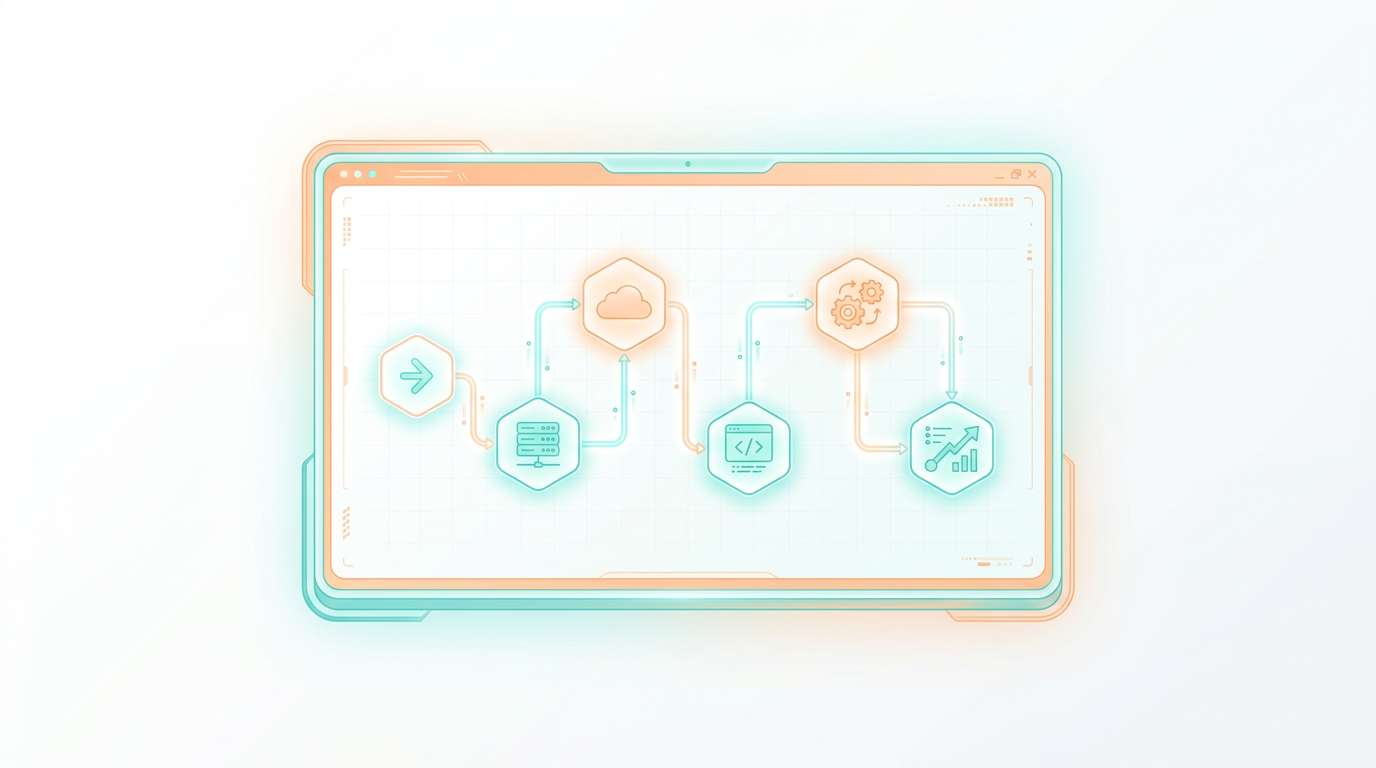
- Master the "Agentic Loop": Don't just ask for a function. Ask the AI to "Write a function, then write a test suite for it, then identify three potential security vulnerabilities in your own code." This is how CRED (the fintech giant) reported doubling their execution speed in early 2026.
- Learn the Fundamentals of Rust or C++: Even if you want to be a web developer, understanding how memory and threads work will allow you to debug the "black box" of AI-generated code.
Final Thoughts
In March 2026, the "best" free website to learn coding isn't a single URL—it's a pipeline. You start with the fundamental logic of Harvard CS50, build the project-based grit of The Odin Project, and specialize in the high-level orchestration taught by freeCodeCamp.
The era of the "syntax-only" developer is over. The era of the Agentic Architect has begun. The tools have become infinitely more powerful, but that power requires a more sophisticated pilot. Don't just learn to write code; learn to command the systems that write it for you.
Your value in 2026 isn't in your fingers on the keyboard; it's in the clarity of your intent and the depth of your architectural understanding. The resources are free, the agents are ready, and the only limit is your willingness to dive deep into the "why" behind the "how."